

for weight loss, don't count to 10,000 steps. Count what you add to your normal day. Every 1,000 brisk steps burns about 0.18 calories per pound of body weight (0.4 per kilogram) above resting. So the more you weigh, the fewer steps you need for the same result: +6,000 steps at 220 lb (100 kg), +7,500 at 175 lb (80 kg), +10,000 at 130 lb (60 kg). That's about 240 calories a day.If steps are the only thing you change, +5,000 a day gets you about 1–1.7 lb (0.5–0.8 kg) a month. To lose about 1 lb (0.5 kg) a week, split the deficit: half from steps, half from food. Start with +1,500 steps and add another 1,000–1,500 each week. Judge your weight by the weekly average.
To lose weight by walking, add 6,000 to 10,000 brisk steps to your normal day. At 220 lb (100 kg), about 6,000 is enough. At 175 lb (80 kg), you need 7,500. At 130 lb (60 kg), about 10,000. That's 45–80 minutes of walking and roughly 240 calories on top of what you'd burn at rest. It covers half the deficit you need to lose about 1 lb (0.5 kg) a week, and food covers the other half. Below you'll find a table by body weight, a 4-week plan and what to do when the scale won't move.
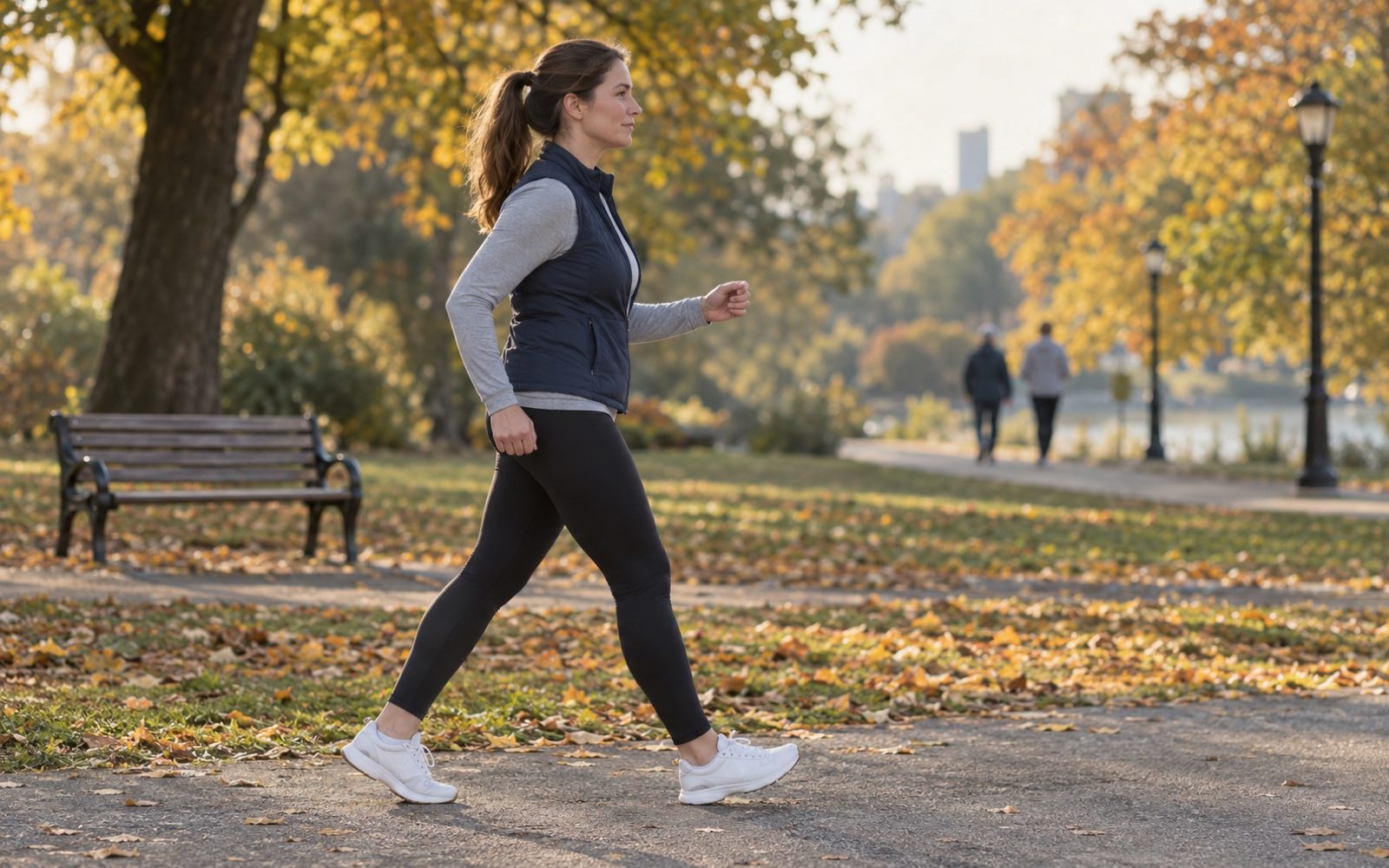
How many steps a day you need to lose weight at your weight
Two things matter: how much you weigh and how many steps you add to your normal day. The steps you already take are baked into your current weight. Weight loss comes from what you add.
| Your weight | Steps to add per day | Minutes of brisk walking | Calories above resting |
|---|---|---|---|
| 130 lb (60 kg) | +10,000 | 70–80 | ≈ 240 |
| 155 lb (70 kg) | +8,500 | 60–70 | ≈ 240 |
| 175 lb (80 kg) | +7,500 | 55–60 | ≈ 240 |
| 200 lb (90 kg) | +6,500 | 45–55 | ≈ 235 |
| 220 lb (100 kg) | +6,000 | 45–50 | ≈ 240 |
The math is simple. 1,000 steps is about 0.45 miles (700–750 m). For each of those stretches at a brisk pace, your body burns about 0.18 calories per pound of body weight above what it would burn on the couch. Multiply your weight in pounds by the number of steps in thousands, then by 0.18. For 175 lb and +7,500 steps: 175 × 7.5 × 0.18 ≈ 240 calories. In kilograms, use 0.4: 80 × 7.5 × 0.4 = 240.
This matters most for lighter people, who are more often women: they need more steps to burn the same 100 calories. A 130 lb (60 kg) woman has to walk 10,000 steps to burn what a 220 lb (100 kg) man burns in 6,000. So at a lower body weight, the other half of the deficit, your plate, matters more.
Why only half? To lose about 1 lb (0.5 kg) a week, you need a deficit of about 500 calories a day. Covering all of it by walking would take an hour and a half to almost three hours of brisk walking every day, depending on your weight. A more realistic split is 240 calories from steps and the same from food. To find your own numbers, see how to calculate a calorie deficit.
Finding your baseline is easy. Go about your normal week and check the step counter on your phone. Your 7-day average is your baseline. If your baseline is 4,000 and the table says +7,500, your target is 11,500 steps a day. Don't jump straight there: the 4-week plan is below.
How many calories walking burns and how many count toward your deficit
Depending on the site, 10,000 steps burns 300, 400 or even 600 calories. The spread comes down to body weight and what exactly is being counted.
Many watches, cardio machines and online calculators show calories burned including your resting burn. Even on the couch, your body burns about 0.45 calories per pound (1 per kilogram) every hour. Only what's above resting counts toward your deficit, and that's about a quarter less than the number on the screen. For 175 lb (80 kg) and 10,000 steps: about 420 calories including resting, about 320 above it.
Here's what added steps give you if your food stays the same: calories above resting per day and weight lost per month, at a brisk pace.
| Steps added per day | 130 lb (60 kg) | 175 lb (80 kg) | 220 lb (100 kg) |
|---|---|---|---|
| +3,000 | 70 cal · 0.6 lb (0.3 kg) | 100 cal · 0.9 lb (0.4 kg) | 120 cal · 1.0 lb (0.5 kg) |
| +5,000 | 120 cal · 1.0 lb (0.5 kg) | 160 cal · 1.4 lb (0.6 kg) | 200 cal · 1.7 lb (0.8 kg) |
| +7,500 | 180 cal · 1.5 lb (0.7 kg) | 240 cal · 2.1 lb (0.9 kg) | 300 cal · 2.6 lb (1.2 kg) |
| +10,000 | 240 cal · 2.1 lb (0.9 kg) | 320 cal · 2.7 lb (1.2 kg) | 400 cal · 3.4 lb (1.6 kg) |
You can run your own numbers in a minute:
- calories per day = weight in pounds × thousands of steps × 0.18 at a brisk pace, or × 0.16 at a leisurely pace (in kilograms: × 0.4 or × 0.35);
- pounds per month = calories per day × 30 ÷ 3,500. 3,500 calories is roughly the energy in 1 lb of body fat (7,700 per kilogram).
In real life, you'll usually lose less. Your body wins back some of what you burn through a bigger appetite and a lazier evening. So treat the table as a ceiling, not a promise. If food covers the other half of the deficit, the result roughly doubles.
10,000 steps: where the number came from and how many you really need
The 10,000 figure appeared in Japan in 1965 as the name of a pedometer, manpo-kei, which means "10,000-step meter." The round number sold devices, but there was no research behind it.
In 2022, researchers pooled data from 15 studies that followed people for years, almost 47,500 adults in total. The risk of early death dropped as daily steps went up, then leveled off. For people under 60, that happened at around 8,000–10,000 steps a day; for people over 60, at 6,000–8,000.
A 2025 review of 57 studies found a similar pattern. People who walk 7,000 steps a day have a 47% lower risk of early death than those who walk 2,000. Their risk of cardiovascular disease is 25% lower. These are observational studies: they show a link but don't prove that the steps themselves are the cause.
For health, 7,000–8,000 steps a day is already a solid level. Read more in our article on walking and heart health. For weight loss, there's no set number: what counts is how much you add to your normal day, as in the table in section 01.
Walking, stairs or a backpack: calories burned in 30 minutes
When you don't have time for long walks, you can burn more with speed, hills or extra weight. The table shows calories for 30 minutes, resting burn included. MET (metabolic equivalent) shows how many times more energy an activity takes than resting. The values come from the Compendium of Physical Activities, the standard reference for energy costs.
| How you walk | MET | 130 lb (60 kg) | 175 lb (80 kg) | 220 lb (100 kg) |
|---|---|---|---|---|
| Leisurely walk, 2.8–3.1 mph (4.5–5 km/h) | 3.5–3.8 | 105–115 | 140–150 | 175–190 |
| Brisk walk, 3.4–3.7 mph (5.5–6 km/h) | 4.3–4.8 | 130–145 | 170–190 | 215–240 |
| Very brisk walk, 4.0–4.3 mph (6.5–7 km/h) | 5.5 | 165 | 220 | 275 |
| Japanese walking: 3 minutes fast, 3 minutes easy | ≈ 4.5–5 | 135–150 | 180–200 | 225–250 |
| Stairs: walking up and down | ≈ 4–7.5 | 120–225 | 160–300 | 200–375 |
| Brisk walk with a backpack at 10% of your weight | ≈ 5–5.5 | 150–165 | 200–220 | 250–275 |
| Running at 5 mph (8 km/h), for comparison | ≈ 8 | 240 | 320 | 400 |
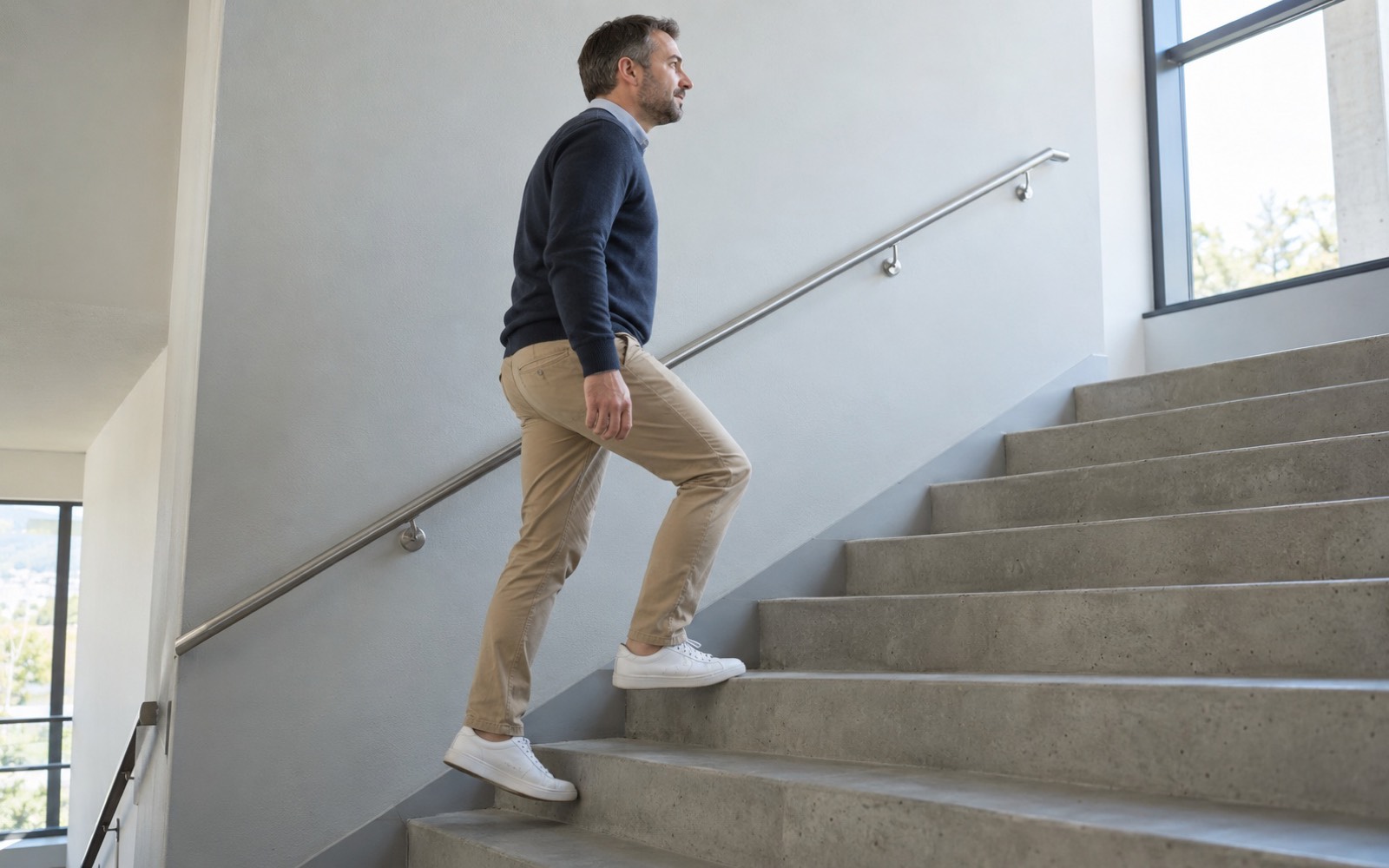
Stairs. Climbing stairs is one of the most demanding kinds of walking. Going up fast, one step at a time, is 9.3 MET, far more than even very brisk walking on flat ground. But nobody climbs for 30 minutes straight: you also have to come down, and that's much easier, about 3.5 MET. That's why the table shows a range for going up and down: about 4 MET at an easy pace and up to 7.5 MET at a brisk one. The simplest approach is to take the stairs instead of the elevator during the day: walk up, and ride down if going down bothers your knees.
Backpack. Walking with weight on your back adds less than social media promises. A backpack at 10% of your body weight raises the burn by about 10–15%, and it also works your back and core. Start with 5% of your body weight: water bottles wrapped in a towel will do. Pack the load high and close to your back. If you have back or knee problems or high blood pressure, talk to your doctor about the extra weight first.
Japanese walking. The pattern is simple: 3 minutes fast, 3 minutes easy, at least 5 rounds. In half an hour it burns a bit more than a steady brisk walk and does more for your heart. For how to do it and who it's for, see our guide to Japanese interval walking.
Running is in the table only for comparison. It burns almost twice as much per minute, but it's harder on your joints. For weight loss, what matters more is what you can keep doing every day.
A 4-week walking plan for weight loss
Week zero is just for finding your baseline: 7 normal days and the average from your step counter. After that, add one walking block each week.
| Week | Steps above baseline | How to get them | What to watch |
|---|---|---|---|
| 1 | +1,500 | two easy 8–10 minute walks after meals | feet, knees, sleep |
| 2 | +3,000 | one brisk 20-minute walk and one 10-minute walk after a meal | weekly average weight, not a single weigh-in |
| 3 | +4,000 | brisk walks of 20 and 15 minutes, stairs instead of the elevator | evening appetite: are you eating the extra steps back? |
| 4 | +5,000 | 30 minutes brisk or Japanese walking, plus 10 minutes after a meal and the stairs | average weight and waist size compared with week zero |
There's one rule: add a new block only when the last one feels routine. If your feet or knees start to ache, go back a week and check your shoes.
After week four, check the weight table again. At 200–220 lb (90–100 kg), +5,000 is already close to your target: hold it and walk some stretches faster. At 130–175 lb (60–80 kg), keep adding 1,000 steps a week, or add hills and stairs to get the same burn in less time.
don't set aside a separate hour for steps. Tie them to things you already do every day: a walk after lunch, getting off the bus a stop early, stairs instead of the elevator, taking phone calls on the move. A 15-minute call on foot is about 1,500 steps.
Walking after meals: 10 minutes that smooth out blood sugar spikes
After you eat, your blood sugar rises and usually peaks within 30–60 minutes. Working leg muscles take up some of that sugar, so even an easy walk lowers the peak. A 2022 review pooled studies in which long stretches of sitting after a meal were broken up with light walking: 2 minutes every 20 minutes, or 5 minutes every 30. Blood sugar after the meal came out noticeably lower than with nonstop sitting. Standing breaks helped too, but less than walking.
| How long to walk | When to go | What it does |
|---|---|---|
| 2–5 minutes | every 20–30 minutes if you sit after eating | already smooths the sugar peak |
| 10–15 minutes | within 30 minutes of eating | lower sugar peak, plus 1,000–1,500 steps |
| 20–30 minutes | within an hour of eating | a solid chunk of your daily added steps |
For weight loss, a post-meal walk doesn't do its work through calories: 15 easy minutes burn just 30–50 calories above resting. Its real strength is that it's tied to a meal, so it's hard to forget. Three walks of 10–15 minutes give you 3,000–4,500 steps, about what the plan adds in week three.
You don't need to wait an hour after eating: an easy walk is fine right away. Save the 1–2 hour wait for hard workouts. If you get stomach pain or bad heartburn on a walk after eating, slow down and mention it to your doctor.

Why the scale won't move even though you walk a lot
"I walk 10,000 steps a day and I'm not losing weight" is a common complaint. First, look at your weekly average, not one morning's weigh-in: water and salt make the scale bounce around. If the average hasn't moved for 2–3 weeks, there are usually four reasons why.
- You got lighter, so your steps burn less. Drop from about 200 to 175 lb (90 to 80 kg), and the same 10,000 steps burn roughly 11% less. What to do: redo the math from section 02 with your new weight.
- Your body wins back what you burned. After walks you get a bit hungrier, and in the evening you move less: you get up less often and sit longer. To see how everyday movement affects your burn, read our article on NEAT. What to do: write down everything you eat for two weeks and compare it with your target.
- The number on the screen flatters you. Many trackers and machines count calories including your resting burn, so only about three-quarters of that number goes toward your deficit. If you "eat back" the full number, your deficit disappears. What to do: don't add the calories from your watch to your food target.
- Steps pushed out strength training. If you dropped the gym or home workouts for walks, you lose muscle, and with it part of your resting burn. What to do: keep 2 strength sessions a week.
What to add, in this order: speed (fast stretches), hills (stairs, a slope, treadmill incline), weight (a backpack at 5–10% of your body weight), 2 strength sessions a week and a food deficit you've calculated, not guessed. If you're doing all of that and your average weight hasn't moved for 3–4 weeks, go through the other causes in our article on the weight loss plateau.
Pace, shoes and knees: how not to quit in week two
Pace. Use the talk test: at a brisk pace, you breathe harder but can still finish your sentences, while singing is out. On a step counter, that's over 100 steps a minute, and 110–130 for many people. Count your steps for one minute once and remember how it feels.
Shoes. You need a cushioned sole, room for your toes and nothing that rubs. Pavement is harder than dirt: a park path, a track or a treadmill is easier on your joints.
Knees. Walking on flat ground doesn't harm healthy knees. Going down puts more load on your knees than going up. So if you carry extra weight or feel discomfort, walk up the stairs and take the elevator down. If your knees ache, cut back your added steps and split them into several short walks.
When to see a doctor. If you get chest pain, shortness of breath that stops you from talking, or dizziness while walking, stop and see a doctor right away. If pain or swelling in your knee, foot or heel doesn't go away after 1–2 weeks of taking it easy, get it checked too. If you have heart disease, high blood pressure, diabetes or a lot of extra weight, talk your plan over with your doctor before adding steps.
How to track steps and meals together
What works is the pair: steps plus your plate. It helps to see both numbers together. Once a week, put three averages side by side: steps, weight and calories eaten. If your steps went up but so did your calories, you're eating the walks back. If both held steady and your weight didn't move for 2–3 weeks, go back to section 07.
If you track workouts and meals in the Sportygram app, you can log your daily steps in your workout log and see what you ate against your target in your food diary. Enter the number from your phone's step counter: steps don't sync automatically yet. The app adds your steps to the calories burned for the day, shown in the same workout log. It's a rough estimate, closer to what a watch shows than to what you burn above resting, so don't add it to your food target.
FAQ
Do you have to walk 10,000 steps a day?
No. The number came from a 1965 ad for a Japanese pedometer. In a large analysis of 15 long-term studies, the risk of early death leveled off at around 8,000–10,000 steps for people under 60 and 6,000–8,000 for those over 60. For weight loss, there's no set number: what counts is what you add. From a 4,000 baseline, 8,000 burns a noticeable amount. From 9,000, one more thousand barely matters.
How many miles and minutes is 10,000 steps?
With a stride of 28–30 inches (70–75 cm), 10,000 steps is about 4.3 miles (7 km), and a mile is roughly 2,100–2,300 steps. At a leisurely 2.8 mph (4.5 km/h), that's 90–100 minutes; at a brisk 3.7 mph (6 km/h), 70–80 minutes. Taller people cover more ground per step. For your own number, walk a mile you know with your step counter on and see how many steps it takes.
How many calories does an hour of walking burn?
It depends on your weight and pace. An hour of brisk walking, resting burn included, is about 260–290 calories at 130 lb (60 kg), 340–380 at 175 lb (80 kg) and 430–480 at 220 lb (100 kg). Only part of that counts toward your deficit: subtract what you'd burn resting for that hour, about 80 calories at 175 lb, which leaves 260–300. A leisurely pace burns about a fifth less.
Is it better to walk in the morning or evening for weight loss?
For weight loss, your weekly total matters more than the time of day. Pick the time that's least likely to get pushed aside. A morning walk gets done before the day gets in the way. A walk after dinner has a bonus: it smooths out the blood sugar spike after the meal. There's no need to walk on an empty stomach: it has no proven weight loss benefit.
Can you lose weight by walking alone, without dieting?
Yes, but slowly. Adding 5,000 steps a day with no change in what you eat gets you roughly 1–1.7 lb (0.5–0.8 kg) a month, and usually less in real life, because appetite wins back part of the burn. Splitting the deficit between steps and food works better, and you don't need a strict diet for that. For how to cut calories without suffering, see finding a deficit that works.
Should you walk with ankle weights?
It's better not to. Weight on your ankles changes how you walk and puts extra load on your knees and hips with every step. If you want to burn more, wear a backpack at 5–10% of your body weight: the load sits closer to your center, so your joints take less strain. Even simpler: walk some stretches faster, or find a hill or a flight of stairs.
What should I do if walking hurts my knees?
Don't quit. Take a step back instead. Cut your added steps to a level that didn't hurt, split them into several short walks and check your shoes. For now, take the elevator down and choose dirt paths over pavement. If the pain doesn't go away in 1–2 weeks, your knee swells or it hurts even at rest, see a doctor.
Is walking on a treadmill different from walking outside?
At the same speed, the difference in calories is small. On a treadmill, it's easier to hold a steady brisk pace, and you can add incline: walking uphill burns more without speeding up. Just don't hold the handrails. Leaning on them takes work off your legs, so you burn less. Outside, on the other hand, it's easier to walk for a long time without getting bored.
The bottom line
- Don't count to 10,000 steps. Count what you add to your normal day: about +6,000 brisk steps at 220 lb (100 kg), +7,500 at 175 lb (80 kg), +10,000 at 130 lb (60 kg). That's about 240 calories.
- 1,000 brisk steps burn about 0.18 calories per pound (0.4 per kilogram) above resting. Watches and machines count your resting burn too, so only about three-quarters of their number goes toward your deficit.
- If steps are all you change, +5,000 a day gets you 1–1.7 lb (0.5–0.8 kg) a month. To lose about 1 lb (0.5 kg) a week, split the deficit: half from steps, half from food.
- Add one block a week: +1,500, +3,000, +4,000, +5,000. Judge your weight by the weekly average.
- If the scale won't move, add in this order: speed, hills, extra weight, strength training and a calculated food deficit.
Checklist: walking for weight loss
- I tracked my steps for a week and know my baseline: my 7-day average.
- I added one block and I'm holding it for a week.
- I walk part of my steps briskly: breathing harder, but still finishing my sentences.
- I walk for 10–15 minutes after at least one meal a day.
- I look at my weekly average weight, not a single morning.
- I don't add the calories from my watch to my food target.
- My food deficit is calculated, not guessed.
- Two strength workouts a week are still in my plan.
Sources
- World Health Organization. WHO guidelines on physical activity and sedentary behaviour. 2020. — Adults should get 150–300 minutes of moderate activity a week; there is no target in steps.
- Paluch A. E. et al. Daily steps and all-cause mortality: a meta-analysis of 15 international cohorts. The Lancet Public Health, 2022. — 47,471 adults: the risk of early death levels off at around 8,000–10,000 steps for people under 60 and 6,000–8,000 for people over 60.
- Ding D. et al. Daily steps and health outcomes in adults: a systematic review and dose-response meta-analysis. The Lancet Public Health, 2025. — 57 studies: 7,000 steps versus 2,000 was linked to a 47% lower risk of early death and a 25% lower risk of cardiovascular disease.
- Buffey A. J. et al. The acute effects of interrupting prolonged sitting time in adults with standing and light-intensity walking on biomarkers of cardiometabolic health in adults: a systematic review and meta-analysis. Sports Medicine, 2022. — Breaks for light walking noticeably lowered blood sugar after meals compared with nonstop sitting and worked better than standing breaks.
- Herrmann S. D. et al. 2024 Adult Compendium of Physical Activities: a third update of the energy costs of human activities. Journal of Sport and Health Science, 2024. — Walking at 3.5–3.9 mph (5.6–6.3 km/h) is 4.8 MET, climbing stairs fast is 9.3, going up and down stairs is 7.5 and going down stairs is 3.5.
This material is for informational purposes and does not replace medical advice.