

bar over your midfoot and about 9 inches (22 cm) off the floor, shins against the bar, arms straight, shoulders slightly ahead, back flat. Breathe into your belly and push the floor away so your hips and shoulders rise together.As a beginner, do 3 sets of 8 reps once or twice a week. Spend two weeks with a kettlebell (8–16 kg or 18–35 lb for women, 16–24 kg or 35–53 lb for men), then switch to the bar and add 2.5–5 kg (5–10 lb) per workout. Sumo isn't an easier version, just a different stance and grip: keep whichever style gives you a flatter back when you film yourself from the side. Pain shooting down your leg or a numb foot means a trip to the doctor, not the gym.
A deadlift means picking a barbell up off the floor and standing all the way up, using your legs, glutes and back. Proper form comes down to five setup points: the bar over your midfoot, shins touching the bar, arms straight, shoulders slightly in front of the bar and a flat back. From there, you push the floor away with your legs and the bar travels straight up along them. If you're a beginner, 3 sets of 8 reps once or twice a week is plenty. End each set when you could still do 2–3 more reps. Spend the first two weeks with a kettlebell: 8–16 kg (18–35 lb) for women, 16–24 kg (35–53 lb) for men. Then move to the barbell and add 2.5–5 kg (5–10 lb) per workout as long as your form stays clean.
What a deadlift is and what muscles it works
The deadlift is a fundamental barbell lift: you pick the bar up off the floor, stand up straight and lower it back down. In the conventional deadlift, your feet are hip-width apart and your hands grip the bar outside your legs. In the sumo deadlift, your stance is wide and your hands go inside your legs.
It trains your legs and back at the same time:
- Glutes and hamstrings drive your hips forward and bring you upright.
- Quads (the front of your thighs) straighten your knees and break the bar off the floor.
- Spinal erectors, the long muscles along your spine, keep your back flat.
- Traps and lats hold your shoulders in place and keep the bar close to your body.
- Forearms handle your grip, and your abs keep your torso rigid.
When researchers measured muscle activity in 13 college athletes, the work shifted as the bar rose (source 6). Near the floor, your quads, glutes and back muscles work harder. Closer to the top, your hamstrings and calves do more.
Are you ready to deadlift with a barbell? A 3-part test
The key skill behind the deadlift is the hip hinge: you push your hips back while your back stays flat. Test it with three quick checks and answer yes or no to each.
- Wall hinge. Stand with your back to a wall, half a step away, knees slightly bent. Push your hips back until your glutes touch the wall. Does your back stay flat, and do your knees stay put instead of sliding forward?
- Dowel along your back. Grab a stick (a broomstick works). Hold it with one hand behind your neck and the other behind your lower back so it touches the back of your head, your upper back and your tailbone. Hinge forward until your hands reach your knees. Are all three contact points still there?
- Lift from the floor. Set a kettlebell between your feet: 8–12 kg (18–26 lb) for women, 16–24 kg (35–53 lb) for men. Lift it 5 times in a row with the same hinge. Does your lower back stay flat, without jerking the weight up?
Three yeses: start the plan in section 07 (two weeks with a kettlebell, then the barbell). A no on check 1 or 2: spend two weeks on prep work (dumbbell Romanian deadlifts, glute bridges and back extensions), then take the test again. A no on check 3: pull the kettlebell from a plate or a step. Once 5 reps from that height look clean, bring it back to the floor and test yourself again.
No gym yet? You can do the first two weeks at home with a kettlebell. For more ways to use one, see our guide to kettlebell training.
The starting position: five points and bar height
When all five points line up, the bar travels straight up. Check them on side-view video: you can't judge a flat back by turning your head toward a mirror.
- Bar over your midfoot. Looking down, the bar should split your foot in half. Feet hip-width apart, about 12 inches (30 cm), toes turned out 10–15°.
- Shins touching the bar. Bend your knees only after you've gripped the bar, and don't roll the bar toward you.
- Arms straight and vertical. Grip the bar just outside your legs.
- Shoulders slightly in front of the bar. Hips above your knees and below your shoulders. This isn't a squat.
- Back flat from head to hips. Look at the floor 5–6.5 feet (1.5–2 m) ahead.
If even one point is off on video, rebuild your setup from scratch before the next set. If you still can't get it right with that weight, take some plates off.
Bar height. A full-size plate is 45 cm (17.7 inches) across, so the bar sits about 9 inches (22 cm) off the floor. With smaller iron plates, the bar sits lower, and reaching down to it tends to round your back. Set those plates on aerobic steps or a stack of large plates so the bar comes up to the same 9 inches. Better yet, use 5 kg (10 lb) technique plates: they're light but full-size.
Grip. Start with a double overhand grip, both palms facing you. If the bar slips, try the hook grip: wrap your index and middle fingers over your thumb to pin it against the bar. Beginners don't need a mixed grip, with one palm facing you and the other facing away.
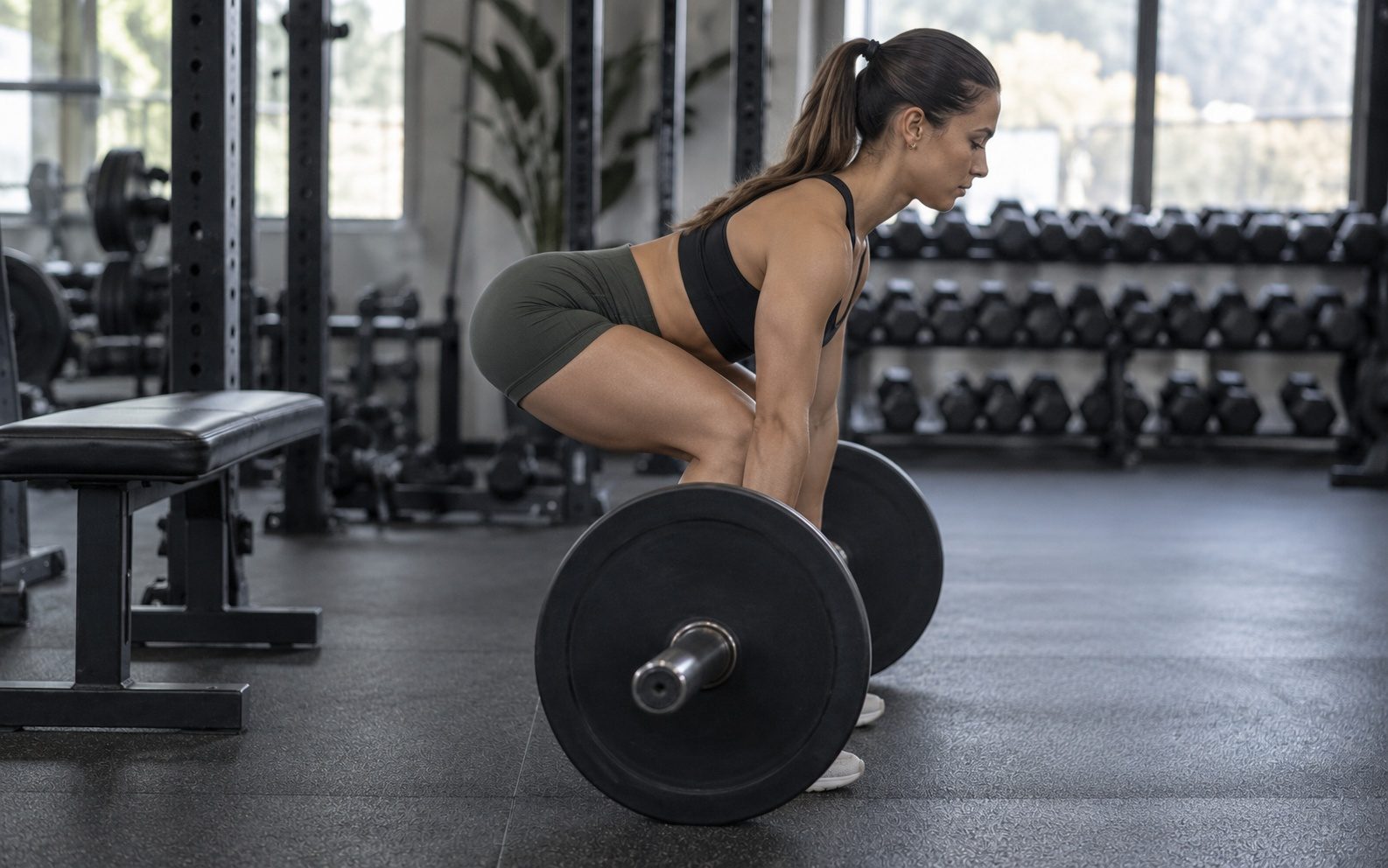
How to deadlift step by step: lifting and lowering the bar
Six of the eight steps happen before the bar leaves the floor. If something goes wrong in your setup, you can't fix it once the bar is moving.
Lifting:
- Stand so the bar is over your midfoot.
- Hinge forward, pushing your hips back, and grip the bar outside your legs.
- Bend your knees until your shins touch the bar.
- Flatten your back: chest up slightly, shoulders pulled down away from your ears.
- Breathe into your belly and brace your abs like you're about to take a punch.
- Take the slack out of the bar: pull up smoothly until it presses against the plates and stops rattling. The bar is still on the floor.
- Push the floor away with your legs. Your hips and shoulders rise together, and the bar slides up your shins. Once it passes your knees, drive your hips forward.
- At the top, stand tall and squeeze your glutes without leaning back.
Your arms are just hooks: they hold the bar, while your legs and back do the lifting.
Lowering:
- Push your hips back first and let the bar slide down your thighs.
- Bend your knees once the bar has passed them, or they'll get in its way.
- Set the bar down over your midfoot and check your setup points again.
Breathing. Breathe into your belly before each rep, hold your breath on the way up and exhale at the top. Pressure in your belly helps keep your back flat (source 7). But holding your breath also raises your blood pressure, so if yours is high, don't hold it. More on that in section 09.
Belt. Beginners don't need one. A lifting belt is for weights close to your max, when you can only do 1–5 reps. With lighter weights, a belly breath and tight abs keep your torso solid.
Conventional or sumo: how to choose
Sumo isn't an easier or a more advanced version of the conventional deadlift. It's a different setup for your feet, hands and torso. The numbers below come from measurements taken at a national powerlifting championship, where 12 lifters pulled conventional and 12 pulled sumo (source 1).
| Conventional | Sumo | How we know | |
|---|---|---|---|
| Stance | About 12 in (30 cm), feet under your hips | About 28 in (70 cm), roughly twice as wide | Championship measurements: 32 and 70 cm (source 1) |
| Toes | Turned out 10–15° | Turned out 35–45°, knees in line with toes | Same study: 14° and 42° |
| Grip | Outside your legs, about 22 in (55 cm) | Inside your legs, about 18.5 in (47 cm) | Same study |
| Torso at the start | Leans forward more | 5–10° more upright | Same study |
| Bar path | Longer, 25–40% more work | Shorter | Same study |
| Load on the hip joints | About the same | About the same | Same study: no significant difference |
| Load on the lower back | Higher | About 10% lower | Measurements at competitions (source 2) |
| What works harder | Calves | Quads | Muscle activity readings (source 6) |
In sumo, the bar travels a shorter distance and your torso stays more upright, so your lower back takes less load. Conventional involves more total work, but the stance feels more natural. Try both with a light weight, film yourself from the side and keep the one where your back is flatter and the bar stays closer to your legs.
How to do a sumo deadlift:
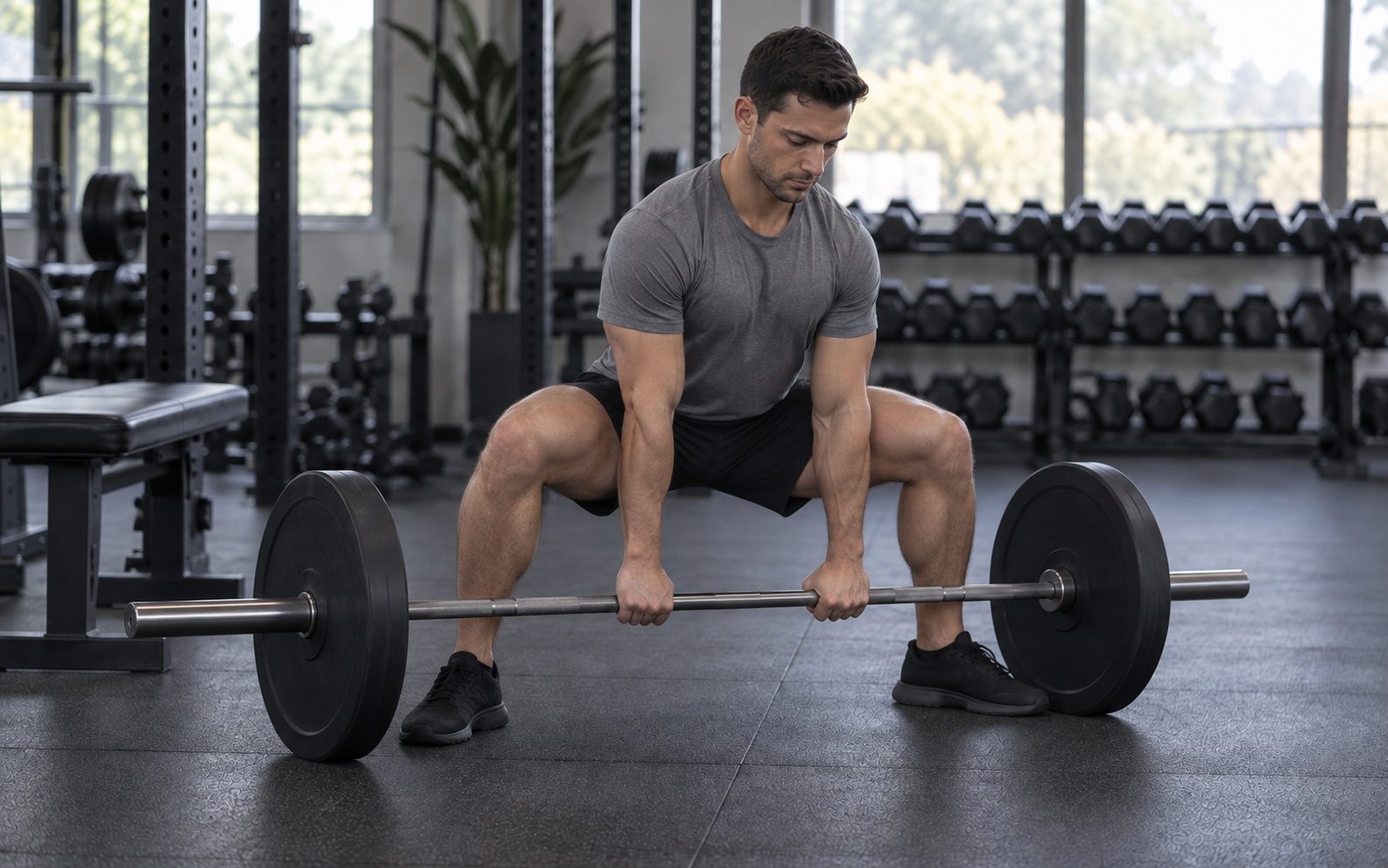
- Set your feet about 28 inches (70 cm) apart, twice as wide as in conventional. Turn your toes out 35–45°, with the bar over your midfoot.
- Push your knees out in line with your toes so they don't cave in.
- Grip the bar inside your legs, about shoulder-width apart, arms vertical.
- Keep your hips lower than in conventional, your back flat and your torso more upright.
- Breathe in, take the slack out of the bar, then stand up by driving your feet into the floor and pushing your knees out. Squeeze your glutes at the top.
The trap bar is a hexagonal frame you stand inside. It puts less load on your lower back, hips and ankles, but more on your knees. In a study of 19 powerlifters, their one-rep max was 8% higher with a trap bar than with a straight bar: 265 kg versus 245 kg, or about 584 versus 540 lb (source 3). For a beginner, it's an easy first step toward the deadlift, since you don't have to steer the bar around your knees.
The Romanian deadlift starts from the top: the bar goes down to mid-shin, and your knee angle barely changes. It's a separate exercise with its own technique.
Common deadlift mistakes: what side-view video shows and how to fix them
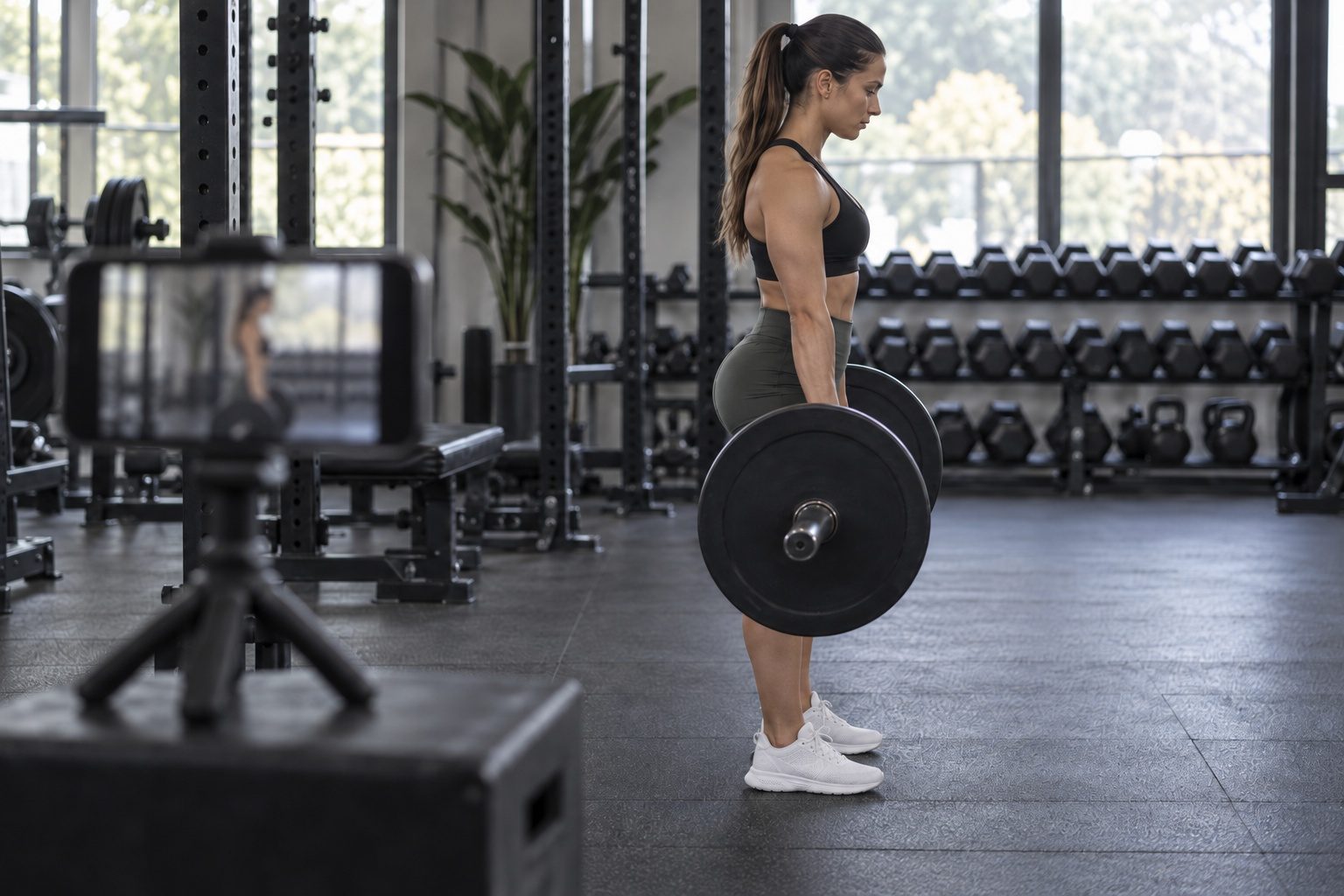
You can't feel your back rounding mid-lift, but it jumps out on video. Set your phone exactly side-on at hip height, about 10 feet (3 m) away, and check the footage against this table.
| What you see on video | What it means | How to fix it |
|---|---|---|
| Lower back rounds near the floor | The weight is more than your back can hold, or the bar sits too low | Drop 10–15% of the weight, raise the bar to 9 inches (22 cm), repeat the dowel check |
| Hips shoot up before your shoulders: legs already straight, bar still low | Your back is doing the lifting, not your legs, and your lower back is overloaded | Think "push the floor away"; hips and shoulders rise together |
| Bar drifts forward, away from your shins | Longer lever, more load on your back | Start with the bar over your midfoot, keep it against your legs with straight arms |
| Jerking the bar off the floor | The load hits your back before your legs engage | Take the slack out first, then push smoothly with your legs |
| Knees travel forward and the bar has to go around them | You set up like a squat, with your hips too low | Hips above your knees, shins only slightly angled at the start |
| Leaning back at the top | Your lower back arches and gets compressed under the load | Stand tall, squeeze your glutes, shoulders over your hips |
| Bar hits your knees on the way down | You bent your knees before the bar passed them | Hips back first, bend your knees once the bar is below them |
| Head tilted up toward the mirror | Your neck is cranked back, and your spine loses its straight line | Look at the floor 5–6.5 feet (1.5–2 m) ahead |
Your second clue is where you feel the work after a set.
| Where you feel it | What it means | What to do |
|---|---|---|
| Glutes and hamstrings | Normal | Keep going |
| Lower back aches | The bar drifted away from your legs, or your hips rose before your shoulders | Check your video against rows two and three of the table above, and lower the weight |
| Scraped shins | The bar is traveling close to your legs, which is right | Wear knee-high socks or long pants, but don't move away from the bar |
| Your grip gives out first | Your forearms are still weaker than your legs and back | Use the hook grip; save straps for later, when the weight goes up |
| Sharp pain, or pain shooting down your leg | This isn't muscle fatigue | Stop the workout and read section 09 |
film one working set every week, not just on day one, and watch it right away, before your next set. That way you fix the mistake in the same workout, before it turns into a habit.
How much weight to start with and how to progress
Your starting weight isn't a percentage of your body weight or whatever the person next to you lifts. It's a weight you can move with clean form on every rep. Here's a plan for the first 6 weeks if you passed the test in section 02. "In reserve" in the table means how many more reps you could have done when you ended the set.
| Weeks | What you do | Women | Men | Sets | When to move on |
|---|---|---|---|---|---|
| 1–2 | Kettlebell deadlift, dumbbell Romanian deadlift | 8–16 kg (18–35 lb) | 16–24 kg (35–53 lb) | 3×8–10, 3 reps in reserve | Every rep looks clean on video |
| 3–4 | Barbell deadlift | A 10–15 kg (22–33 lb) technique bar, or a 20 kg (45 lb) bar on blocks | A 20 kg (45 lb) bar plus 5–10 kg (about 10–20 lb) per side | 3×8, 2–3 in reserve | Two workouts in a row with no mistakes |
| 5–6 and beyond | Barbell deadlift, adding weight | +2.5 kg (5 lb) per workout | +2.5–5 kg (5–10 lb) per workout | 3–4×5–8, 2 in reserve | Keep adding while the video shows no rounded back |
Without full-size plates, the bar sits too low, so raise it on blocks to the same 9 inches (22 cm).
If your back starts to round only on the last rep, don't add weight next workout. If it rounds earlier, drop 10–15%, as in the mistakes table. And if your lower back aches for more than two days, back off 10–15% as well and rebuild the movement. When the weight stops going up every workout, read our guide to progressive overload.
Strength benchmarks, not standards. In the Strength Level database, people log their own lifts. For a man who weighs 80 kg (176 lb), the beginner level is about 89 kg (196 lb) for a one-rep max, or 1.1 times body weight. Novice is about 119 kg (262 lb), and intermediate is about 155 kg (342 lb). For a woman who weighs 60 kg (132 lb), those levels are about 40, 60 and 86 kg (88, 132 and 190 lb). Keep in mind that these are people who already lift. On that site, a beginner has deadlifted correctly for at least a month, a novice has trained regularly for six months and an intermediate lifter for two years. Your own lifting history is the benchmark that matters most.
How many sets and reps, and how often to deadlift
When you're starting out, 3 sets of 8 reps once or twice a week is enough. Once the weight has gone up noticeably, switch to 3–4 sets of 5–8 reps. Rest 2–3 minutes between sets, since the deadlift works a lot of muscles at once. Before your working sets, do 2–3 warm-up sets with a light weight.
Put heavy deadlifts and heavy squats on different days, because both load your legs and back. If you train twice a week, do barbell deadlifts at your working weight on one day and dumbbell Romanian deadlifts on the other.
Is the deadlift bad for your back, and when to see a doctor
The most detailed numbers come from powerlifting, where the deadlift is one of the three competition lifts and people pull maximal weights. A review of 9 studies found 1.0–4.4 injuries per 1,000 hours of training in powerlifting (source 4). The back, shoulder and knee were hurt most often. The risk was similar to other non-contact sports and lower than in contact sports.
The deadlift is even used to treat lower back pain. In a Swedish study, 35 people with back pain deadlifted for 8 weeks under a physical therapist's supervision (source 5). The ones who got the most out of it had milder pain and more endurance in their back muscles. In other words, it isn't right for everyone, so if your back hurts, see a doctor first: they can tell you whether deadlifting is a good idea for you. For common approaches to that kind of pain, see our guide to exercises for lower back pain.
See a doctor, not the gym, if:
- the pain shoots down your leg below the knee;
- your foot goes numb or weak;
- you have trouble urinating (see a doctor the same day);
- your back hurts at night while you're resting;
- the pain isn't easing after 3–5 days, or it's getting worse;
- you have a recent herniated disc or have had spine surgery.
Holding your breath on a heavy rep raises your blood pressure (source 7). That hasn't been proven harmful, but if your blood pressure is high, don't take chances: don't hold your breath, exhale as you lift and ask your doctor how heavy you should go. More in our guide to exercising with high blood pressure.
Deadlift alternatives
If the deadlift platform is taken, your lower back aches or pulling from the floor isn't working yet, try one of these instead:
- Trap bar deadlift. The closest thing to a regular deadlift, with less load on your lower back.
- Kettlebell deadlift. The same technique with a shorter range of motion, and you can do it at home.
- Dumbbell Romanian deadlift. Works your hamstrings and glutes harder.
- Block pull. The bar sits on blocks just below your knees, which makes the setup easier.
- Back extension. Works your back muscles and glutes without a bar in your hands.
- Hip thrust and glute bridge. Train your glutes with almost no load on your back. Here's how to do hip thrusts.
- Farmer's walk. Walking with a heavy dumbbell in each hand, which trains your grip and core.
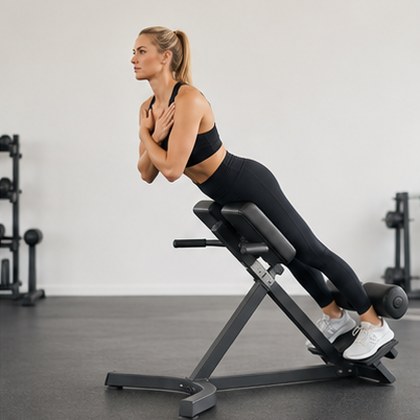 Back extension
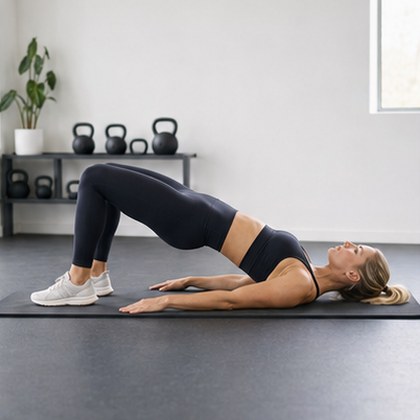 Glute bridge
Log your first set
The best benchmark is what you lifted a month ago. In the Sportygram app, you log your sets, reps and weight in your workout log, and a chart under each exercise shows how the weight on the bar climbs from one workout to the next.
Start with today's numbers, even if it's just a kettlebell. If your lower back aches, swap the deadlift for back extensions in your log for a week, and bring it back once the ache is gone.
FAQ
What muscles does the deadlift work?
Your glutes, hamstrings, quads and spinal erectors work the hardest. Your traps and lats keep the bar close to your body, your forearms handle the grip and your abs keep your torso rigid. In sumo, your quads work harder than in conventional, while in conventional your calves work harder.
How much weight should a beginner start deadlifting with?
For the first two weeks, use a kettlebell: 8–16 kg (18–35 lb) for women, 16–24 kg (35–53 lb) for men, 3 sets of 8–10. Then move to the bar: a 10–15 kg (22–33 lb) technique bar or a 20 kg (45 lb) bar on blocks for women, a 20 kg (45 lb) bar with 5–10 kg (about 10–20 lb) per side for men. From there, women add 2.5 kg (5 lb) per workout and men 2.5–5 kg (5–10 lb), as long as your back looks flat on video.
Sumo or conventional: which is better for beginners?
Neither one is easier. In sumo, your stance is twice as wide, the bar travels a shorter distance and the load on your lower back is about 10% lower. The conventional stance feels more natural, but your back does more work. Try both with a light weight, film yourself from the side and keep the one where your back is flatter.
Can you deadlift with dumbbells or a kettlebell at home?
Yes. Set the kettlebell on the floor between your feet, or hold dumbbells at your sides. The rules are the same: weight over your midfoot, arms straight, shoulders slightly ahead, back flat, push the floor away with your legs. The range of motion is shorter than with a barbell, which makes it a convenient place to start. When the kettlebells feel light, move to the bar.
Do you need a belt and straps to deadlift?
Not as a beginner. A belt is for weights close to your max, when you can only do 1–5 reps. With lighter weights, a belly breath and tight abs keep your torso solid. Straps help when your grip gives out before your legs and back do. Try the hook grip first, and save straps for your heaviest sets.
Why does my lower back hurt after deadlifts?
A dull ache on both sides that fades in 2–3 days is usually delayed onset muscle soreness in your back muscles. Pain during the set more often points to a mistake: the bar drifted away from your legs or your hips rose before your shoulders, so check the mistakes table. Sharp pain in one spot, pain shooting down your leg or numbness means it's time to see a doctor.
How should you breathe during a deadlift?
Before each rep, breathe into your belly, brace your abs and hold your breath on the way up. Exhale at the top, once you're standing tall. Pressure in your belly helps keep your back flat. But holding your breath also raises your blood pressure. If yours is high, don't hold your breath: exhale as you lift, use a moderate weight and talk to your doctor about how much to lift.
What is the difference between a deadlift and a Romanian deadlift?
The deadlift starts from the floor, your knees bend a lot, and your legs, glutes and back all work together. The Romanian deadlift starts from the top: the bar goes down to mid-shin, your knee angle barely changes and your hamstrings take more of the load. They're different exercises, and they complement each other well in the same program.
The bottom line
- Set up with five points: bar over your midfoot, shins against the bar, arms straight, shoulders slightly ahead, back flat. The bar sits about 9 inches (22 cm) off the floor.
- Conventional and sumo use different foot and hand positions; one isn't more advanced than the other. Choose based on your side-view video.
- Start with a kettlebell (8–16 kg or 18–35 lb for women, 16–24 kg or 35–53 lb for men), move to the bar after two weeks and add 2.5–5 kg (5–10 lb) per workout.
- Do 3 sets of 8 reps at first, then 3–4 sets of 5–8 as the weight goes up, once or twice a week.
- Pain shooting down your leg, a numb foot or back pain at night means a doctor, not the gym.
Checklist: before each set
- Bar over my midfoot and about 9 inches (22 cm) off the floor.
- Shins touching the bar.
- Grip just outside my legs, arms straight.
- Shoulders slightly ahead of the bar, hips above my knees.
- Belly breath, abs braced, slack taken out of the bar.
- Push the floor away with my legs, hips and shoulders rising together.
- Phone set up side-on at hip height and recording.
Sources
- Escamilla R. F. et al. A three-dimensional biomechanical analysis of sumo and conventional style deadlifts. Medicine & Science in Sports & Exercise, 2000. — Stance width, toe angle, grip and bar path in sumo and conventional deadlifts among 24 lifters at a national powerlifting championship.
- Cholewicki J., McGill S. M., Norman R. W. Lumbar spine loads during the lifting of extremely heavy weights. Medicine & Science in Sports & Exercise, 1991. — In 57 lifters at a national championship, the load on the lower back was 10% lower in sumo than in conventional deadlifts.
- Swinton P. A. et al. A biomechanical analysis of straight and hexagonal barbell deadlifts using submaximal loads. Journal of Strength and Conditioning Research, 2011. — In 19 powerlifters, the trap bar max was 265 kg versus 245 kg; load on the lower back was lower and load on the knees was higher.
- Aasa U. et al. Injuries among weightlifters and powerlifters: a systematic review. British Journal of Sports Medicine, 2017. — Powerlifting has 1.0–4.4 injuries per 1,000 hours of training, a risk similar to other non-contact sports.
- Berglund L. et al. Which patients with low back pain benefit from deadlift training? Journal of Strength and Conditioning Research, 2015. — 35 people with lower back pain: who benefited most from 8 weeks of supervised deadlift training.
- Escamilla R. F. et al. An electromyographic analysis of sumo and conventional style deadlifts. Medicine & Science in Sports & Exercise, 2002. — Which muscles work harder in sumo and conventional deadlifts, and at which part of the lift.
- Hackett D. A., Chow C. M. The Valsalva maneuver: its effect on intra-abdominal pressure and safety issues during resistance exercise. Journal of Strength and Conditioning Research, 2013. — Holding your breath raises both abdominal pressure and blood pressure; harm during strength training hasn't been confirmed.
This material is for informational purposes and does not replace medical advice.